Table of Contents
Berkshire County Courts, MA *

Berkshire County has one of the most elaborate court systems, with several courts operating from various locations. This ensures that all matters are resolved, from minor to substantial cases. Residents of the county can trust the courts to handle probate, civil, criminal, juvenile, family, and other cases from start to finish, and also review contested matters in the higher appellate courts. The court staff also steps in when residents are stuck, helping them file their cases and access and retrieve past court records.
How to Access Berkshire County Court Records

 Online Access
For access to case information using the court case number, case type, and party name, inquirers can use the Massachusetts Trial Court Case Access. The system provides valuable records based on the type of case and the court handling it. Usually, parties can access docket entries, party information, case dispositions, and more. The site also provides instructional material for the public and attorneys to navigate the system and even pay court fees.
 Alternative Online Options
For parties interacting with the Berkshire courts for the first time, unsure of where to start or which office to go to when looking for court records, CourtCaseFinder is a handy tool. The third-party records finder allows the public to access records from the same database instead of hopping from one site to the next. They can use the system from anywhere in Berkshire. The platform provides access to public filings like criminal records, divorces, arrests, and more for first-timers, legal professionals, and the general public.
 In-Person Requests
If the records in question are not available online, the next thing is to request publicly available records from the respective clerks, recorders, and registrar's offices. Each court, through its official pages, provides contact details for the clerk, recorder, or registrar's office, so requesters can find the records they need by case type and the court that heard the case. Alternatively, parties can access the records through the public computer kiosks at the courthouses; it helps if they provide details such as the case name, case/docket number, court name, and other specifics.
 Archived Records
Access to older historical records depends on the case type, court, county, year, and other factors. Some records are kept by the court that handled the case, while others can be accessed at the state archives, especially hard-copy or paper-form records. The Massachusetts Archives contains permanent records dating to the 1600s. Since the records are generally stored in off-site locations, inaccessible to the public, interested parties can complete the Court Archives Information Request Form to submit to the Judicial Archivist for more details about where the records are held.
Overview of the Berkshire County Court System

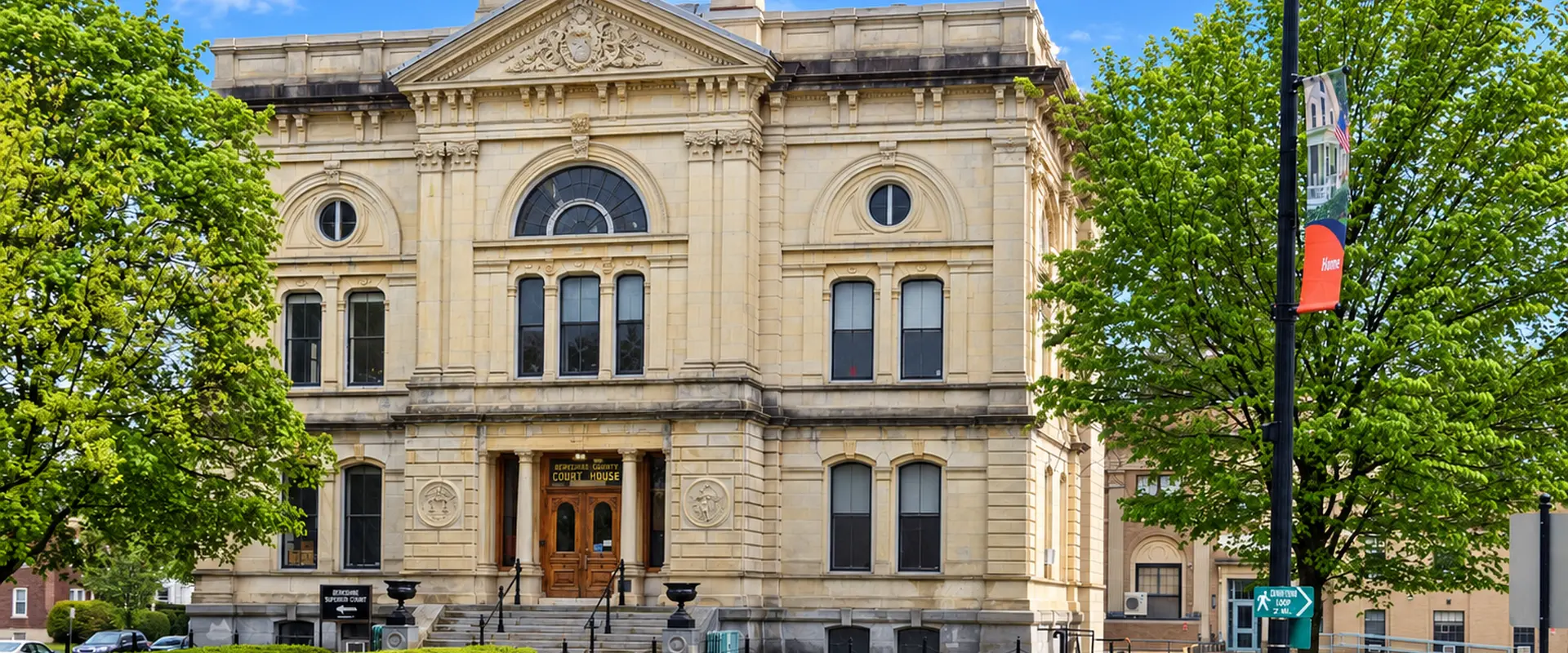
Berkshire County is part of the Massachusetts unified court system, which explains why the courts do not operate independently. They are guided by the statewide judiciary, from the Supreme Court to the state appellate courts, and finally, the local county trial courts. The county's highest court is the Superior Court in Pittsfield. It tackles the highest-stakes criminal and civil matters and accepts appeals from other courts.
Next, with three courthouses in various cities, the District Courts handle criminal, housing, civil, and other matters within their jurisdiction. There are also Juvenile Courts operating at three locations, handling matters concerning juveniles or persons under 18 years. Another court with specialized jurisdiction in Berkshire is the Probate and Family Court, which resolves probate and family-related cases. Lastly, the Housing Court (Pittsfield Session) resolves housing-related cases.
Types of Courts in Berkshire County, Massachusetts
 Superior Court
Berkshire has one countywide Superior Court serving all the towns and cities in the region. It is tasked with handling the most substantial criminal and civil cases in Berkshire County.
Primary location: Berkshire County Superior Court
Its jurisdiction includes:
- Felonies and serious criminal cases
- Major civil lawsuits
- Personal injury cases
- Huge monetary claims
- Contract disputes
- Appeals from other courts
 District Courts
There are three District Courts serving the people of Berkshire County, namely the Southern Berkshire, Northern Berkshire, and Pittsfield District Courts. They work together to handle significant criminal and civil cases outside the Superior Court's jurisdiction.
Primary locations: Pittsfield District Court, Southern Berkshire District Court, and Northern Berkshire District Court.
They hear cases like:
- Criminal charges
- Housing matters
- Small claims
- Civil lawsuits
- Mental-health cases
 Juvenile Courts
Also operating from three different locations in Great Barrington, Pittsfield, and North Adams, the Juvenile Courts are among the specialized courts in the region. Their main focus is on cases involving juveniles and minors.
Primary locations: Pittsfield Juvenile Court, Southern Berkshire District Court Building, and Northern Berkshire District Court Building
They hear the following cases:
- Juvenile delinquency
- Guardianship matters
- Child Requiring Assistance cases (CRA)
- Care and protection matters
 Probate and Family Court
The other court serving all the towns and cities from one location is the Probate and Family Court. It focuses on hearing family law, domestic, and probate cases in the region.
Primary location: Berkshire Probate and Family Court
It hears cases like:
- Divorces
- Child custody and child support
- Parenting time
- Child paternity
- Guardianships
- Wills, estates, and trusts
- Name changes
 Housing Court
The Housing Court is special in that it is a separate trial court in the state that operates regionally, rather than as an exclusive county court. The one in Berkshire is the Western Housing Court in Pittsfield.
Primary location: Western Housing Court (Pittsfield Session)
Its cases include:
- Landlord vs. tenant disputes
- Eviction cases
- Disputes in residential housing
- Residential property lawsuits
- Criminal charges involving residential property
- Housing code matters
How to File a Case in Berkshire County

The filing process for all cases in Berkshire County usually depends on the case type and the court with jurisdiction over the matter. Filers must, however, pay attention to the details to ensure successful filing.
 Step 1: Choose the Correct Court
The first thing for filers to do is understand the details of their cases well enough to know which court has jurisdiction. It determines where they file, depending on the nature of their case. They want to avoid misfiling by directing the case to the right court. For instance, major criminal and civil matters are resolved by the Superior Court, while the Juvenile Courts handle cases involving minors. Each court has its jurisdiction, and since there are multiple court locations, filers present their cases to the courts serving their region.
 Step 2: Complete Required Forms
With the first step clear, the next is to complete the required forms with accurate details, without leaving any blanks. These forms can be obtained based on the specific case. The state provides official forms on the Court Forms page, usually organized by topic and court department, so it's easier for the public to find the forms they need. Alternatively, the state provides eFiling Forms for cases eligible for eFiling, but parties can also seek assistance from courthouse staff when stuck, who can help them access the forms.
 Step 3: File the Case
Depending on the case type and the court handling the case, matters can be filed electronically or in person. For cases eligible for paper filing, the completed forms can be submitted to the respective court clerks, but the most convenient method is eFiling through eFileMA. The system allows individuals and legal professionals to submit their documents electronically. The clerks will review the filings, and if everything is in order, the case will be accepted and docketed, after which the case will be assigned a case number.
 Step 4: Pay Filing Fees
There are generally court fees due at the time of filing, and the costs are mandatory. The amount varies based on the case, its magnitude, and the court handling it, so it is important that filers check the details first before filing their cases. Parties filing cases electronically can pay automatically through the eFiling system, which guides them through it. However, if the parties cannot afford to pay the required fees, they may apply for a waiver by filing an Affidavit of Indigency, which, if accepted, allows them to proceed with the case without paying the required fees.
 Step 5: Serve the Other Party
Filing the case doesn't automatically notify the respondent or opposing party; the filer must legally and formally notify them before the case proceeds. This is a mandatory procedure, without which hearings, arraignments, and other legal steps cannot be taken against the accused. Massachusetts allows the sheriff/deputy, constable, or a special court-appointed party to serve the papers. When successful, the party serving files the proof of service with the court, allowing the case to proceed.
 Step 6: Monitor the Case
For cases filed electronically through eFileMA, parties can use the system to monitor their case's status. They can receive notifications when their cases are accepted/rejected so they stay updated. Alternatively, parties can use the Massachusetts Trial Court Case Access platform for broader access to the case. It allows them to access case status, docket information, and other important case details. The courthouse staff can also provide more case details, and parties can use the public computers and courthouses for more court information.
Berkshire County Courthouse Directory
Berkshire County Courthouses
There are ten local courthouses in the region, including 1 Superior Court, 3 District Courts, 1 Probate and Family Court, 3 Juvenile Courts, and 1 Housing Court. Their addresses and contact details can be found in this directory.
Legal and Self-Help Resources
Extending free legal aid regarding civil cases is Community Legal Aid in Pittsfield. The organization reaches out to low-income and other vulnerable communities in Berkshire County, assisting them in resolving civil matters like housing, employment, public benefits, and more. The Berkshire Center for Justice also assists with civil matters, offering free legal representation for low-income families. It focuses on issues such as divorce, bankruptcy, evictions, real estate issues, and other civil cases. Residents can also rely on the courthouse staff for assistance when filing cases and accessing court records. The clerks can provide filing guides and other instructional materials to help out when a filer is unsure of the process.
FAQs
How can I access archived records in Berkshire County?
Old and historical records dating back to the 1600s are kept by the Massachusetts Archives, a permanent database from the office of the Secretary of the Commonwealth of Massachusetts. The records are generally closed to the public, so for access, parties must submit a formal request through the court.
Why are some court records inaccessible in Berkshire County?
Massachusetts generally makes court records accessible, but some are restricted to protect the parties involved and maintain the court's integrity or confidential information. Such records may include juvenile cases where parties involved are minors, some records from the Probate and Family Court, and other impounded records sealed by court order.
What do I need to access court records in Berkshire County?
To access publicly available records, inquirers need only sufficient details to narrow down the search and identify the case efficiently. They need the docket/case number, but if they don't have it, they can use the parties' names in the case. This applies to access to online records and in-person requests.
How long does it take to access court records in Berkshire County?
The total time it takes to access court records usually depends on the access method and the record's location. For instance, records may be accessed at the click of a button when obtained online through CourtCaseFinder or other online databases. However, the search takes longer for physical or archived files that must be accessed in person or after making a formal request.
Other Counties in Massachusetts
Table of Contents
