Table of Contents
Hampden County Courts, MA *

Thanks to several courts across Hampden County, residents, individuals, companies, landlords, employers, legal professionals, and other parties are assured that their cases can be resolved. The courts work together to provide amicable solutions to both major and minor cases, with each maintaining its jurisdiction. There is also a system for contested cases to be reviewed by the higher courts. In addition to resolving their matters, the courthouses also step in when parties need help with filing cases or accessing past court records.
How to Access Hampden County Court Records

 Online Access
Depending on the case and record type, many records from Hampden can be accessed online through the state-provided Massachusetts Trial Court Case Information. This system is efficient for both individuals and legal professionals. It provides access to records from various county courts and the state, including important details like events, dispositions, dockets, and party information. To make access even easier, parties need case particulars such as the case number, the court where the case was filed, and the case type.
 Alternative Online Options
If inquirers need an all-in-one database that compiles records from all the courts in Hampden and other Massachusetts counties, they can use CourtCaseFinder. The records finder tool includes public records like divorces, civil lawsuits, criminal records, and arrests on a single platform, making searches easier, even for multiple records at once. First-timers and legal professionals find the tool handy because they don't have to search multiple courts when unsure which one keeps their records, saving them the effort and speeding up record searches.
 In-Person Requests
Some records are not available online, especially physical or archived records. These can alternatively be accessed in person from the courthouses where the cases were filed. If they know the case details, requesters can reach out to the clerks, registers, or recorders of the various courts for assistance with the records in question. They don't have to disclose why they need the records; all they need is to provide case details such as the parties' names, case type, and case number to make the records easier to trace.
 Archived Records
Some records dating back to the 1600s cannot be accessed in person from the courthouses. They are likely to be transferred to the Massachusetts Archives, which maintains historical records older than hundreds of years. The inquirers must complete the Court Archives Information Request Form to formally request the records they need, and they should specify the case details, like type, case, and county, to access the paper or hard-copy form of the archived records.
Overview of the Hampden County Court System

Hampden is similar to other regions of Massachusetts in its court system. It is elaborate, featuring several courts, some serving from multiple locations. There are two state-level courts, namely the Supreme Court and the Appeals Court, which primarily handle appeals from the lower local courts. As for the county, the highest court is the Superior Court, which handles the highest-stakes criminal and civil cases.
There are five District Courts, spread out across the country, whose focus is on lower-level criminal and civil matters. The rest of the courts are specialized chambers, each dedicated to specific areas like the Probate and Family Court, which hears only probate matters and family-related cases. Next are the three Juvenile Courts that resolve matters concerning minors or persons under 18 years, and finally, there is the Western Housing Court-Springfield Session, which resolves criminal and civil matters regarding residential property and related cases.
Types of Courts in Hampden County, Massachusetts
 Superior Court
There is one Superior Court in Hampden County serving all the residents. It handles the most high-stakes criminal and civil matters because it is the county's highest court.
Primary location: Hampden County Superior Court
Its jurisdiction includes:
- Felonies
- Labor disputes
- Civil lawsuits (over $50,000)
- Medical malpractice
 District Courts
There are five District Courts serving the people of Hampden. They are located in Springfield, Chicopee, Westfield, Palmer, and Holyoke, handling a wide range of criminal and civil cases.
Primary locations: Roderick L. Ireland Courthouse, Chicopee District Court Courthouse, Holyoke District Court Courthouse, Palmer District Court Courthouse, and Westfield District Court Courthouse
The courts work together to resolve:
- Civil disputes
- Criminal cases
- Small claims
- Mental-health hearings
- Housing-related matters
- Motor-vehicle cases
 Probate and Family Courts
One of the specialized trial courts in Hampden is the Probate and Family Court. It handles two major categories of disputes: probate and family-related cases.
Primary location: Hampden Probate and Family Court
It hears the following cases:
- Estates and wills
- Conservatorships
- Trusts
- Divorce
- Child support
- Adoptions
- Child custody
 Juvenile Courts
There are three Juvenile Courts in Hampden, operating from Springfield, Holyoke, and Palmer. The courts focus only on cases concerning minors (persons under 18 years).
Primary locations: Springfield Juvenile Court, Holyoke Juvenile Court, and Palmer Juvenile Court
Cases handled include:
- Juvenile delinquency
- Child Requiring Assistance (CRA)
- Care and protection hearings
- Youthful offender charges
 Housing Court
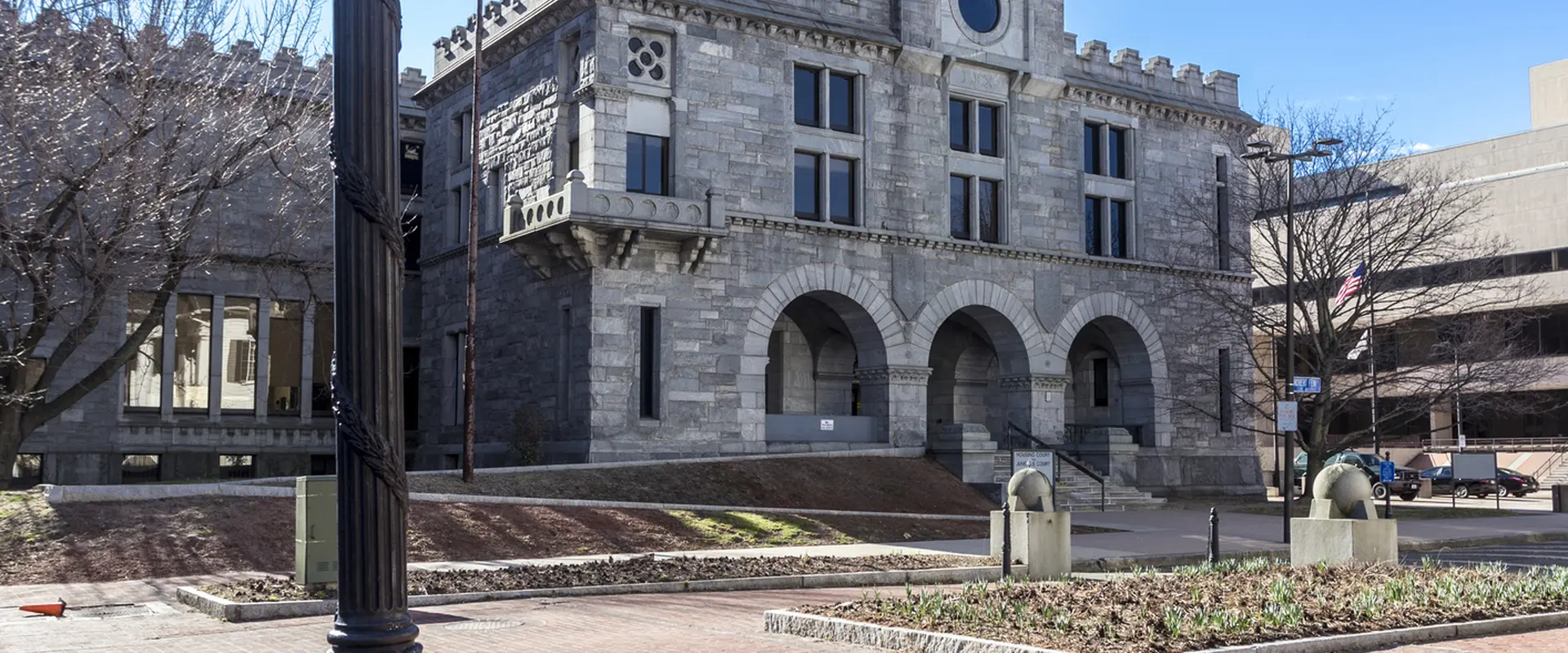
The Western Housing Court-Springfield Session is also a specialized court in Hampden. It focuses on criminal and civil matters regarding residential property.
Primary location: Western Housing Court-Springfield Session Courthouse
Its jurisdiction includes:
- Housing code-disputes
- Evictions
- Landlord-tenant disputes
- Some housing-related criminal and civil cases
How to File a Case in Hampden County

Filing a case in Hampden is quite straightforward, provided that the filers pay attention to the small details. To avoid mishaps and misfiling, they should follow the steps below:
 Step 1: Choose the Correct Court
Hampden has several courts and courthouses, like other counties in Massachusetts. To ensure that the filing is handled by the appropriate court, the parties should understand their case details and then match them to the court within that jurisdiction. They want to take major criminal and civil matters to the Superior Court and the minor ones to the District Courts. Similarly, the Juvenile Court should handle cases involving minors, while the Housing Court should deal with cases involving residential properties.
 Step 2: Complete Required Forms
Once filers ascertain where their case belongs, the next step is obtaining and completing the necessary forms that detail their case. These forms can either be obtained in person at the courthouses with the help of the clerks and registers or downloaded from the official state websites. Filers can access them on the Court Forms site or the eFiling Forms page if filing electronically. They want to confirm that these forms are complete and that the details provided are accurate, because otherwise, they risk misfiling.
 Step 3: File the Case
Self-filers and legal professionals can present their cases in two ways, based on the case type and whether the county court allows it. They can paper-file at the various courthouses where they present their forms in person at the respective clerks' or registers' offices. Alternatively, they can also use eFileMA, which is a platform provided by the state for filers to file cases electronically from anywhere in the county. If everything is in order, the case receives a unique case number for reference and the next stages of the filing.
 Step 4: Pay Filing Fees
Mandatory filing fees apply to various cases filed with the courts in Hampden, and the costs usually depend on the case type, its magnitude, and the court hearing it. Usually, the bigger the case, the higher the fees. Payments are made during the filing, but if parties cannot afford the fees, they may request a waiver. All they need to do is fill out the Affidavit of Indigency. If they can confirm through the supporting documents that they cannot pay the fees, the waiver may be granted, allowing them to proceed with the case without making the full payments.
 Step 5: Serve the Other Party
When the case is filed, there is one more step that filers must follow under Massachusetts law. They are required to formally notify the opposing party or the respondent about the case filed against them. Legally, only a third party authorized by the court may serve, not the filer. This can be the sheriff, constable, or any other authorized server. When done, the filer retains the proof of service and files it with the court. Only after it is verified that it has been handled properly and by the right party can the case proceed.
 Step 6: Monitor the Case
Many activities occur behind the scenes after a case is filed, and the filers must stay updated to avoid issues with the court or last-minute rushes. They can track their case in person at the courthouses where they filed, or more conveniently, use eFileMA or the Massachusetts Trial Court Case Access to find more details. Depending on the method they use, they can learn whether the case was accepted or rejected, determine the docket number, and stay updated on hearing dates and other notifications.
Hampden County Courthouse Directory
Hampden County Courts
Hampden County is served by 11 courthouses, each serving various regions and maintaining its jurisdiction. The courts' addresses and contact details are in this directory.
Legal and Self-Help Resources
Low-income communities, senior citizens, and other vulnerable groups can reach out to the Hampden County Legal Clinic for pro bono legal assistance. The organization's goal is to improve access to justice even for residents who cannot afford it, thanks to volunteering legal professionals. On the other hand, the Massachusetts Fair Housing Center (MFHC) is an organization that provides advocacy for fair housing rights. It serves all of Western Massachusetts, improving access to legal aid and ensuring that residents don't experience housing discrimination or other injustices related to their basic needs. Marginalized communities struggling to interact with the legal system can seek assistance from courthouse staff, who can help them access legal forms, instructional materials, and important court records.
FAQs
How does the State Housing Court work in Hampden County?
Instead of a branch of one of the courts in Hampden, the county is served by its own Housing Court, specifically the Western Division in Springfield. This court focuses only on housing and residential property matters and resolves disputes through the Springfield Sessions Court. It serves the regions of Holyoke, Chicopee, Palmer, Springfield, and other municipalities.
Are all court records public in Hampden County?
Many court records in Hampden are accessible to the general public, provided there are no legal restrictions or confidentiality laws preventing their access. Some records are sealed, protected due to privacy laws, or inaccessible following a court order. They are usually records from the Probate and Family Court and the Juvenile Court, for which only authorized parties have access.
How do I access physical records in Hampden County?
Physical court records are not accessible online; only through the relevant courthouses. Interested parties can access them through the relevant courthouse clerk or register of the court where the matter was filed. They can assist with access to paper-form records and certified copies that parties need. Physical records can also be obtained from the state archives, provided that the parties formally request them.
What is the most convenient way to access court records in Hampden County?
One of the simplest ways to access court records from anywhere in Hampden is through CourtCaseFinder. It aggregates the public records into a single platform for access at the click of a button. Parties can save time and effort, whether they are first-timers unsure of where to start or are legal professionals who need multiple records simultaneously.
Other Counties in Massachusetts
Table of Contents
